Reviewing Go Hug a Cactus Not a Hugger Quote
As an embroidery designer who has spent years digitizing patterns and critiquing finished goods for small businesses, I have learned that the charm of a design lies not just in its concept, but in its execution. When I first pulled up Go Hug a Cactus Not a Hugger Quote, my immediate reaction was one of amused recognition. It captures that specific, dry wit that performs exceptionally well in the current market for personalized gifts and boutique apparel. However, a clever phrase is only half the battle. The real question for any serious maker or Etsy seller is how this graphic translates from a digital file into a tangible, high-quality handmade product.
First Impressions and Visual Personality
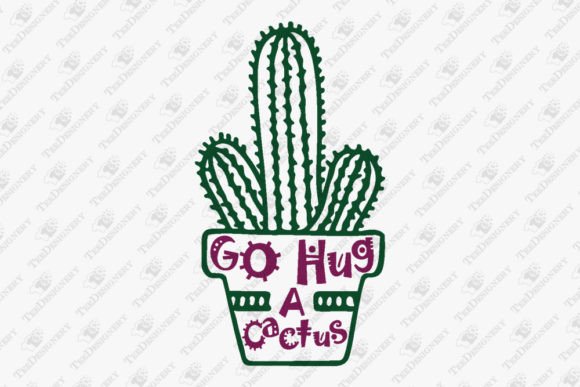
The mood of this piece is playful yet guarded, appealing to introverts and plant lovers alike. Visually, the layout relies on strong typography balanced with illustrative elements. For a designer, this balance is critical. If the text is too dense, it becomes unreadable at smaller sizes. If the cactus illustration is too complex, it risks becoming a blob of thread on certain fabrics. In my assessment, this design strikes a decent middle ground, provided you respect its limitations. It feels native to casual wear and home decor, fitting seamlessly into categories like T-Shirt Designs and general Graphics for lifestyle products.
When evaluating the visual personality, I look for clarity. Does the message pop? Yes. The contrast between the sharp, prickly nature of the cactus and the soft implication of a hug creates a nice thematic tension. This kind of narrative depth increases the perceived value of the finished product, making it more than just a shirt—it becomes a conversation starter.
Real-World Application: The Tote Bag Test
To truly understand how Go Hug a Cactus Not a Hugger Quote performs, I mentally placed it on a canvas tote bag, a staple for any craft business. Canvas has a distinct weave, which can swallow fine details if the stitch density is too low. In this scenario, the design needs to be large enough to maintain legibility. I imagine using a combination of fill stitch for the body of the cactus to give it weight and texture, while employing a clean satin stitch for the border to define the edges sharply against the fabric.
For a sweatshirt embroidery project, the dynamics change. The fluffy texture of fleece or French terry requires higher density to prevent the fabric from poking through the stitches. Here, the quote would serve as a excellent chest placement or a bold back print. The humor resonates well with the cozy, stay-at-home vibe of sweatshirts. However, one must be cautious with the smaller letters. If the design includes tiny serifs or intricate curves, they may get lost in the pile of the fabric. A test run on scrap material is non-negotiable here.
Considerations for Delicate and Curved Surfaces
Not every surface is forgiving. If you are considering this for baby embroidery on a onesie, you must evaluate the comfort factor. Dense stitching on soft baby skin can be irritating. I would recommend scaling the design down significantly and ensuring the backing is trimmed close and covered with a soft touch stabilizer. Furthermore, the stretchiness of knit fabrics used in baby clothes means that without proper hooping and stabilization, the design could pucker, distorting the cute cactus into an unrecognizable shape.
Curved surfaces like caps present another challenge. Embroidering on a structured cap requires precise centering. The Go Hug a Cactus Not a Hugger Quote likely has a horizontal orientation, which works well for the front panel of a dad hat or trucker cap. However, you must ensure the width fits within your standard hoop size. If the design is too wide, you might need to split it or choose a different product, such as a flat-brimmed cap where space is less constrained.
Technical Execution and File Formats
One of the most practical aspects of this product is the versatility of the files provided. You will receive a single zip file containing the design in SVG, PNG, DXF, and EPS formats. For those of us working primarily with embroidery machines, it is important to note that these are primarily vector and image formats. While SVG and DXF formats are compatible with all major cutting machines like Cricut and Silhouette Cameo, embroidery designers often need specific machine formats like PES, DST, or JEF.
If you are using this strictly as a digital embroidery file for cutting vinyl to create an applique design, these formats are perfect. You can cut the cactus shape from green felt or cotton, place it on your garment, and then use a running stitch or tack-down stitch to secure it before satin stitching the edges. This method reduces bulk and is ideal for larger designs on tote bag design projects or aprons. However, if you intend to stitch the entire design directly with thread, ensure you have the appropriate digitized embroidery file version, or be prepared to digitize it yourself from the SVG if your software allows.
Navigating Fabric and Thread Choices
Color choice can make or break this design. A traditional green cactus is safe, but consider experimenting with thread colors to match specific branding or seasonal trends. For holiday embroidery, perhaps a muted sage green pairs beautifully with cream thread for the text. On dark fabrics, you must ensure high contrast. White or light yellow thread for the quote will stand out against navy or black, but avoid low-contrast combinations like grey on black, which will render the witty quote invisible.
Fabric texture also plays a huge role. On smooth cotton or linen, the stitches will lay flat and crisp. On textured waffle knits or ribbed fabrics, the design may appear distorted. Always test on a similar fabric to your final product. This step builds customer trust and ensures your small shop product looks professional, not amateurish.
Commercial Viability and Brand Consistency
For commercial embroidery professionals, consistency is key. Using a design like Go Hug a Cactus Not a Hugger Quote across a line of products—such as matching mugs (via sublimation using the PNG) and shirts (via embroidery or vinyl)—creates a cohesive brand identity. This multi-use potential increases the return on investment for the design asset.
When listing this on platforms like Etsy, use clear printable mockup images that show the texture of the stitches. Buyers want to see the quality. Highlight the humor and the quality of the finish. Mention that it is a unique personalized gift option for friends who prefer plants to people. This targeted marketing speaks directly to the niche audience that appreciates this specific type of humor.
Final Designer Notes
Before you commit to a large batch of custom apparel, take these practical steps:
- Test on Scrap Fabric: Always run a sample to check for puckering and thread breaks.
- Check Stabilizer: Use a cut-away stabilizer for stretchy fabrics and tear-away for stable woven fabrics.
- Verify Licensing: Confirm whether the license allows for unlimited commercial sales or if there are restrictions on the number of finished items.
- Inspect Small Details: Zoom in on the digital file to ensure no nodes are overlapping incorrectly, which can cause machine errors.
- Contrast Check: View the design in black and white to ensure the layout holds up without color reliance.
In conclusion, Go Hug a Cactus Not a Hugger Quote is a solid addition to any designer’s library, particularly for those targeting the quirky, plant-loving demographic. With careful attention to fabric choice, stabilization, and file application, it can elevate a simple item into a best-selling embroidered patch or statement piece. It is not just about stitching; it is about crafting a product that resonates emotionally with the buyer while maintaining high technical standards.